
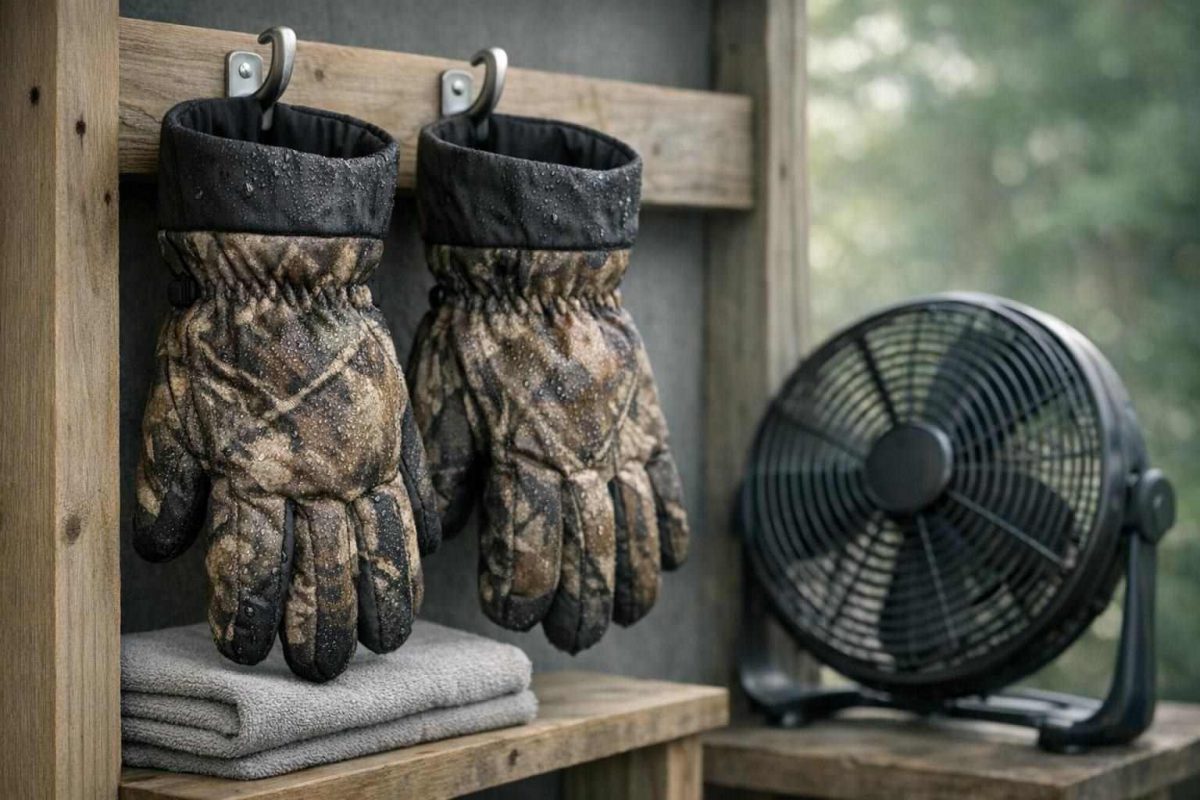
It can be a miserable feeling to arrive at your late season hunting site only to sit for hours in wet, damp cold. And your gloves can be the worst part of the whole experience. In our experience the fastest method of drying your hunting gloves is almost always the worst for them in the long run. The following article deals with one of the most common end-of-day problems for hunters and explains how to use your truck's heater to dry your gloves without damage.
Start by finding where the moisture is
Start by determining the true extent of moisture penetration into the glove. The outer fabric of a glove's shell can typically become wet on the surface whereas the liner can become saturated with moisture. As mentioned previously, sweat can penetrate into the finger portion of the glove as well as the cuff area. Once a glove has been removed from use, check for any of these types of moisture penetration and proceed accordingly.
When taking a pair of gloves off, turn them inside out as far as possible. Some glove liners are fixed and should not be forced through a tight space for fear of stretching the material or detaching the liner from the glove shell. Other glove liners are removable. Take the liner out and dry the two separate items. Blot the material with clean towels to remove as much moisture as possible. Do not twist, wring or bunch up the fingers of a glove when drying out.
Check for dampness in different parts of the glove: palms, fingertips, cuffs and back of hand. Some parts of a hunting glove are constructed of different materials. Some have waterproof or water repellent barriers. Some palm materials are more dense than others and take longer to dry.
Why high heat can ruin useful loft
When wet, it is easy to crush or crowd out the loft of the insulation and when dry, spread unevenly to create cold spots on your hands. If the glove is damaged in this way, the cold spots will be most severe in areas of the hand that normally don't have much blood flow, such as your fingers.
That type of damage can occur in the outer shell, membrane, and fill insulation, as well as the liner of your gloves. Air warm or cool and move it around to evaporate any moisture from your gloves. DO NOT USE TRUCK DASHBOARD, WOODSTOVE, RADIATOR, OR HAIR DRYER TO DRY GLOVES. Direct heat can dry outer part of gloves and still have moisture inside of them. This can also cause damage to adhesives, coatings, elastic, leather, and synthetic materials used in construction of various parts of your gloves.
Using gentle warmth and moving air is far better than trying to dry a glove. Find a room temperature or slightly warm spot and allow for good ventilation. Remember to follow the care label on the glove as some materials are better to dry than others and some may need to be dried in reverse to stop damage to the waterproof and breathable layer.
Shape the glove before it dries
You don't want the wet insulation to settle into a folded up or bunched up shape. Try to lay each glove out flat or hang them from a hook with the fingers down. Make sure the cuff is unrolled as much as possible to allow for maximum airflow.
Turn the glove inside out and lay it out flat on a surface or hang it from a wide, blunt point. Make sure the glove is hanging from the bottom of the fingers and not from the top of the palm to prevent any compression of the fingers. Open out the cuff as much as possible and smooth out any creases in the fingers to form them back to their normal shape. The gloves should be spread out as much as possible and not be folded up or packed into a corner with any objects. Use loose clean paper to support a cuff that has folded in on itself.
Occasionally, between checks, lightly shake each glove, then pat the insulating material back into place with your hands. Note that this gentle handling is not the same as kneading the glove. Should the glove have to be stored before the drying process is complete, it is still better to store it in an open shape to allow for easy completion of the drying process later on.
A practical routine after the stand
Take the gloves off and drop them in your truck. Then, at home, simply transfer them to a dry room. Shake the gloves out occasionally, and then pat them out into their proper shape by hand. If a glove gets a little wet while you're out hunting, just remove it from your pocket and lay it out in a corner of your truck.
Drying a heavily moist glove can take a long time and require more air circulation. Place the fan so that it blows into the cuff, palm and finger areas of both gloves. Turning them every now and then to ensure all surfaces are being dried is all that is required. It is important to check the inside of the glove, as well as the tip of the fingers, for moisture before storing.
Don't put a pair of wet gloves in your gear bin. Even when they seem dry to the touch, there may be moisture left in the gloves that can cause bad smells or even start to deteriorate the materials over time. If, after several hours or a day, your gloves are still damp, re-rotate them and re-blot them to dry.
When waterproof gloves need extra care
These highly technical garments often consist of multiple layers, e.g. the outer shell, a membrane or coating, the insulation and the liner. Also, the waterproof layer on the outside of the glove does not pass the water but the sweat from your hands. This takes longer to evaporate than the water from washing the glove and therefore needs to be allowed to dry out slowly and evenly as well.
Use gentle cleaners to keep waterproof outer shells clean. We recommend avoiding most household cleaners, conditioners and reproofing products as they can leave a residue on gear made with technical materials. Leather palms and soles should be cleaned in line with the manufacturer's instructions for caring for leather and not treated with generic waterproofing products.
Also remember that a persistent wet patch, a separated seam, a peeling coating or a bunched up liner all are maintenance issues. If you leave these problems unsolved your hunting glove no longer will protect your hands from cold and wet in due time.
Store warmth without storing compression
Drying = Storage: This insulated item should be stored just as it is to be worn with dry insulation, unpressed and fully unbunched in all parts with unconfined fingers. Insulated gloves are generally best to be stored away from direct sunlight and warmth and to be stored loosely between layers of mitten linings, between your insulated jacket and shell and within unhard shuttered areas of your truck etc to keep them soft and uncreased for immediate wear.
Check the gloves before heading out for your next hunting trip for signs of deterioration such as thinning, hardening, or even collapsing of the insulating material, as well as compression of the cuff, and torn or puckered stitching. Also, be sure to check the liner to see if it will come out of the glove easily. Make sure that the glove will still fit your hands comfortably and that you can move your fingers freely. Even more importantly, check to make sure that any closures will lay flat against the back of your hand.
Drying an insulated pair of gloves is an unglamorous process. It involves removing excess moisture from the item, maintaining the natural shape of the gloves, using warm air for drying and lastly allowing the inner components to dry slowly. Such care would take far longer to undertake than throwing the pair in the truck's heater to dry quickly, yet in the end it will help to preserve the loft and shape of the product, thus providing the best handwear to take into cold country.